Vitamins cheat sheet

Vitamins cheat sheet

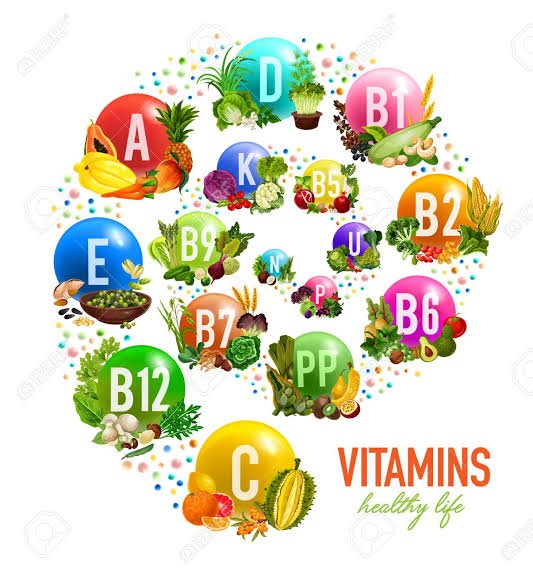
Water soluble vitamins: Vitamin B and C.
Fat soluble vitamins: Vitamins A, D, E, and K.
Vitamin A (Retinol, Retinal, beta-carotene):

  • Function: Helps to form and maintain healthy skin, teeth, bones, and soft tissues.
  • Signs of deficiency: Skin problems, poor night vision, dry eyes, decreased sensory ability, growth retardation, vulnerability to infection.

Vitamin B1 (Thiamine):

  • Function: Converts carbohydrates into energy.
  • Signs of deficiency: Poor appetite, depression, impairment of nerves, and heart muscle wasting.

Vitamin B2 (Riboflavin):

  • Function: Converts carbohydrates into energy.
  • Signs of deficiency: Cracked lips, sore mouth, anemia.

Vitamin B3 (Niacin):

  • Function: Converts carbohydrates into energy and is essential for healthy nervous system.
  • Signs of deficiency: Diarrhea, mental confusion.

Vitamin B6 (Pyridoxine):

  • Function: Helps to make RBCs and breakdown glucose.
  • Signs of deficiency: Anemia and nerve damage.

Vitamin B7 (Biotin):

  • Function: Converts carbohydrates into energy and breaks down glucose.
  • Signs of deficiency: Dermatitis, hair loss, conjunctivitis, neurological symptoms.

Vitamin B9 (Folate):

  • Function: Vital for new cell creation and DNA synthesis.
  • Signs of deficiency: Impaired formation of RBCs, weakness, irritability, headache, palpitations, inflammation of mouth, neural tube defects in fetus.

Vitamin B12 (Cobalamin):

  • Function: Breaks down fatty acids and amino acids and also helps to make RBCs.
  • Signs of deficiency: Pernicious anemia, increased risk for stomach cancer.

Vitamin C (Ascorbic acid and ascorbate):

  • Function: Needed for growth and repair of tissues throughout the body.
  • Signs of deficiency: Scurvy- bleeding gums, bruising swollen joints, slow wound healing.

Vitamin D (Ergocalciferol – D2 and Cholecalciferol – D3):

  • Function: Strengthens and helps form bones and teeth via absorption of calcium and phosphorus.
  • Signs of deficiency: Rickets – skeletal deformities and soft bones.

Vitamin E (Tocopherol):

  • Function: Acts as an antioxidant, helps with formation of RBCS.
  • Signs of deficiency: Inability to absorb fat.

Vitamin K (Phylloquinone):

  • Function: Essential for blood clotting and helps to regulate blood calcium.
  • Signs of deficiency: Excessive bleeding.
Cranial nerves

Cranial nerves

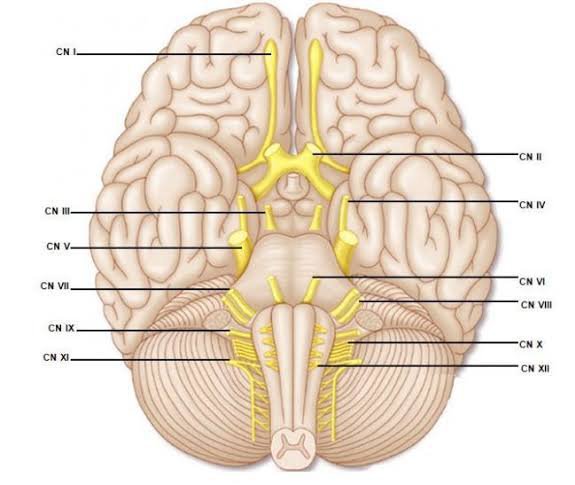
There are totally 12 cranial nerves. They are denoted in Roman numbers from I to XII. These are very easy to remember by just remembering a mnemonic.

Ooh, Ooh, Ooh, To Touch And Feel Very Good Velvet- Such Heaven!

These cranial nerves have different functions. They are mainly divided into sensory, motor, and both. By using the following mnemonic, the function of each cranial nerve can be remembered.

Some Say My Mother Bought My Brother Some Bad Beer, My, My.

Here S stands for sensory, M is for motor, and B is for both.

  1. Olfactory: smell (sensory)
  2. Optic: sight (sensory)
  3. Oculomotor: moves eyes and pupils (motor)
  4. Trochlear: moves eyes (motor)
  5. Trigeminal: face sensation (both)
  6. Abducens: moves eyes (motor)
  7. Facial: moves face, salivate (both)
  8. Vestibulocochlear: hearing, balance (sensory)
  9. Glossopharangeal: taste, swallow (both)
  10. Vagus: heart rate, digestion (both)
  11. Accessory: moves head (motor)
  12. Hypoglossal: moves tongue (motor)
Brain function

Brain function

Frontal lobe:

  • Motor control (premotor cortex)
  • Problem solving (prefrontal area)
  • Speech production (Broca’s area)

Parietal lobe:

  • Touch perception (somatosensory cortex)
  • Body orientation + sensory discrimination

Temporal lobe:

  • Auditory processing (hearing)
  • Language comprehension (Wernicke’s area)
  • Memory and information retrieval

Occipital lobe:

  • Sight (visual cortex)
  • Visual reception
  • Visual interpretation

Cerebellum:

  • Balance
  • Coordination and control of voluntary muscles

Brain stem:

  • Breathing
  • Digestion
  • Heart control
  • Blood vessels control
  • Alertness