The menstrual cycle is complex and is controlled by many different glands and its hormones.
Duration:
The average length of the cycle lasts from 24 days to 32 days. This is calculated from the first day of the period to the day before the next period starts.
How it is controlled?
The menstrual cycle is controlled by the hypothalamus which prompts the pituitary gland to produce certain chemicals to make the ovaries to produce estrogen and progesterone.
Phases of menstrual cycle:
There are four phases. 1. Menstruation 2. Follicular phase 3. Ovulation 4. Luteal phase
Menstruation:
It is the elimination of the thick lining called the endometrium of the uterus. The menstrual fluid contains blood, endometrial cells and mucus. The average duration of each period is from 3 days to one week.
Follicular phase:
It starts from the first day of the menstruation and ends with ovulation. With the help of the hypothalamus, the pituitary gland releases follicle stimulating hormone, which stimulates the ovary to produce 5 to 20 follicles.
Each follicle houses an immature egg. Only one follicle matures into an egg and the others die. This process occurs around day 10 in a 28 days cycle. The growth of the follicle stimulates the thickening of the endometrium for possible pregnancy.
Ovulation:
It is the release of the mature egg from the surface of the ovary. It usually occurs mid-cycle around two weeks or so before menstruation starts. During the follicular phase, the developing follicle causes a rise in the level of oestrogen.
The hypothalamus in the brain recognises these rising levels and releases a chemical called gonadotrophin-releasing hormone (GnRH). This hormone prompts the pituitary gland to produce raised levels of luteinising hormone (LH) and FSH.
Within two days, ovulation is triggered by the high levels of LH. The egg is funnelled into the fallopian tube and toward the uterus by waves of small, hair-like projections.
The life span of the typical egg is only around 24 hours. Unless it meets a sperm during this time, it will die.
Luteal phase:
During ovulation, the egg bursts from its follicle, but the ruptured follicle stays on the surface of the ovary. For the next two weeks or so, the follicle transforms into a structure known as the corpus luteum.
This structure starts releasing progesterone, along with small amounts of oestrogen. This combination of hormones maintains the thickened lining of the uterus, waiting for a fertilised egg to stick (implant).
If a fertilised egg implants in the lining of the uterus, it produces the hormones that are necessary to maintain the corpus luteum. This includes human chorionic gonadotrophin (HCG), the hormone that is detected in a urine test for pregnancy.
The corpus luteum keeps producing the raised levels of progesterone that are needed to maintain the thickened lining of the uterus.
If pregnancy does not occur, the corpus luteum withers and dies, usually around day 22 in a 28-day cycle. The drop in progesterone levels causes the lining of the uterus to fall away. This is known as menstruation. The cycle then repeats.
Being my first blog let’s start with a simple but very important concept.
What are the terms mortality and morbidity? Heard of it, come across it, and know it but still it confuses us, right.
Mortality comes from the Latin word mortalis which simply means mortal or death.
Morbidity comes from the Latin word morbidus which means diseased, sick, ailment, and illness.
Now why am I talking about these concepts. It is because the mortality and the morbidity rates of a particular region or population determines their healthcare status. It plays a very vital role in the development of that region in all aspects. If the rates are very high it means that the particular region is being backward and needs improvement.
How to calculate the mortality and morbidity rates? Its very simple just follow the following formulas.
Mortality rate = (Number of deaths from a specific cause / Total number of deaths in the population) × 100
Morbidity rate is based on two indicators. They are the incidence (new cases with a particular disease) and prevalence (old cases) rate.
Incidence rate = (Total number of new cases of a specific disease during a given time period / Total population at risk during the same time period) × 100
Prevalence rate = (All new and pre existing cases of a specific disease during a given time period / Total population during the same time period) × 100
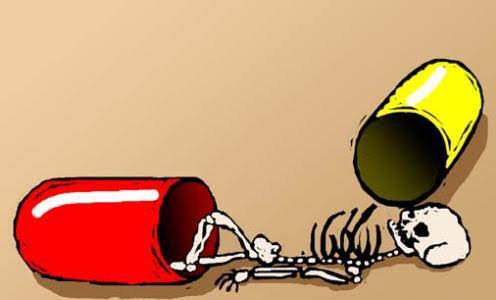
Mortality means death and morbidity means disease.










 Nurses corner